
A Spring Mindset
The “dreamers and doers” who built the Coastal Maine Botanical Gardens

Spring takes its time to get to Maine. My students returned from their Spring Break with tales of glorious D.C. cherry blossoms, balmy Florida baseball games, and sun-kissed South Carolina beaches. And what do we have? Leaden skies and sloppy mud, with spurts of irrational exuberance if the mercury nears 50.
But it’s still Spring, because this season is about more than just warmer temperatures and blooming flowers. It’s about promise and possibility, the sense that no matter how drab the landscape may look at the moment, it can (and will!) blaze with color again one day. After seemingly endless months of ice, snow, and bitter cold, the first green shoots of our day lilies and daffodils have begun poking their way into the light. I feel an almost giddy sense of awe every time I see them.
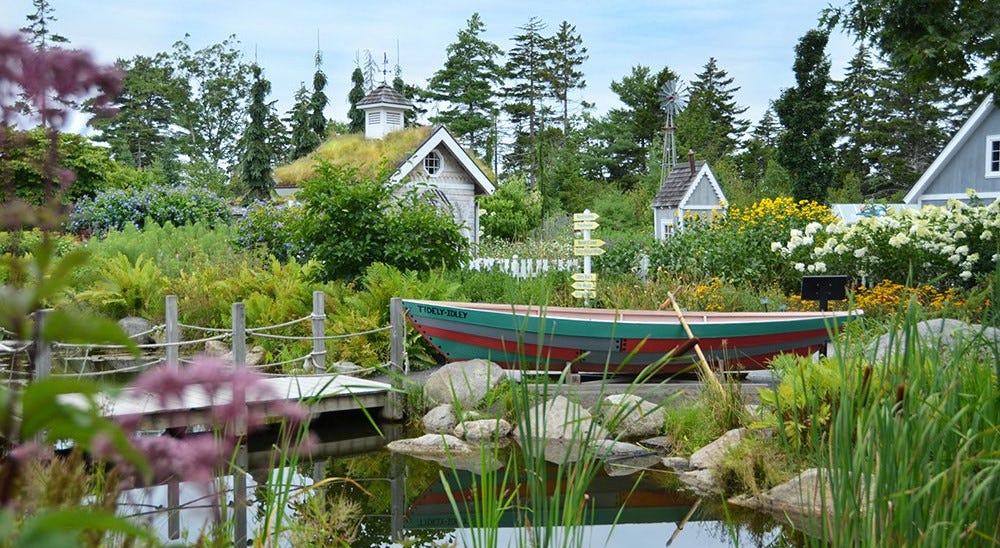
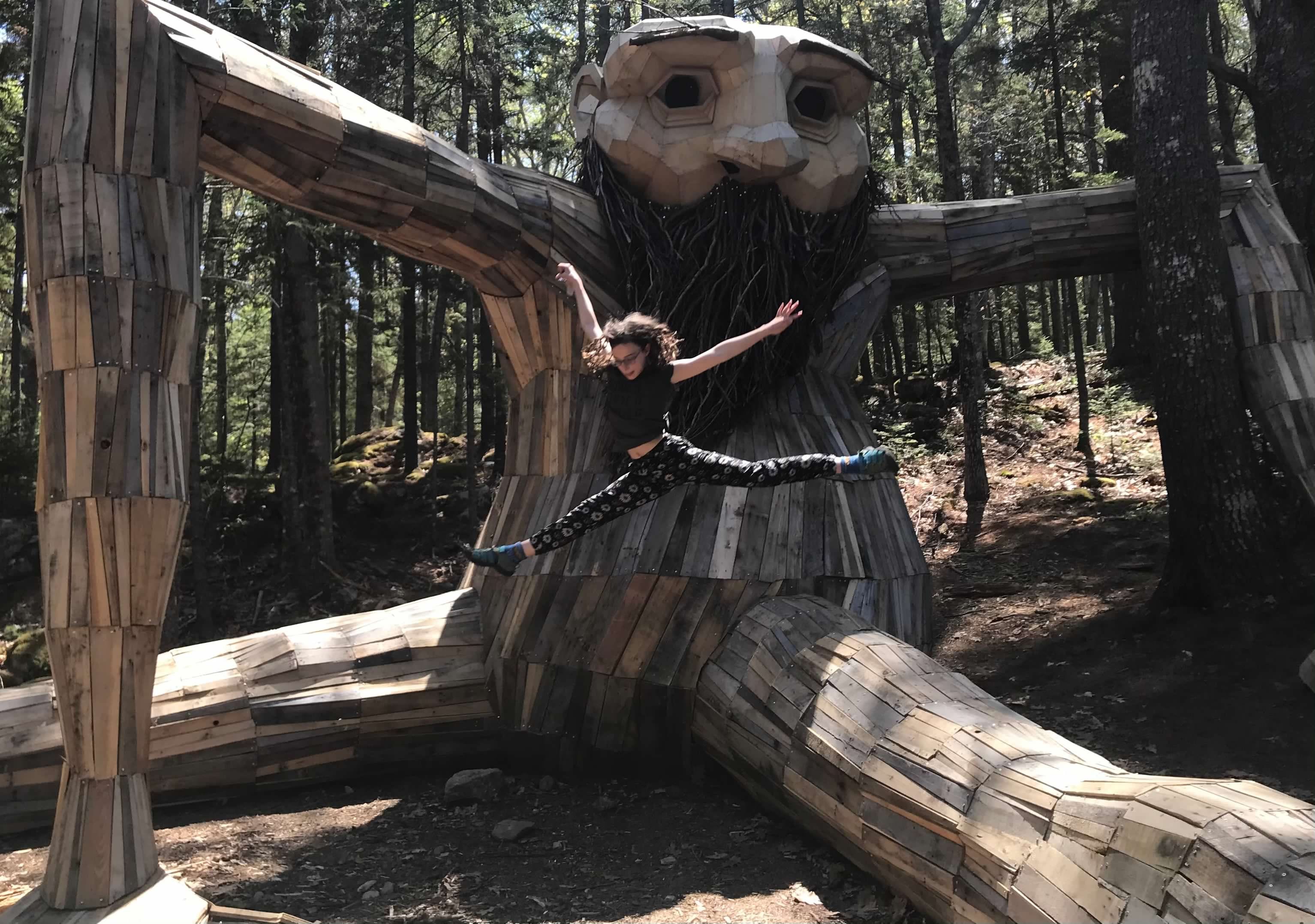
Imagining our barren yard ablaze in color makes me think of one of my family’s favorite places in Maine: the Coastal Maine Botanical Gardens. Located on more than 300 woodsy acres along the Back River west of Boothbay, the Gardens (like Maine itself) are a bit remote and inaccessible. Yet they have grown into New England’s largest botanical garden, with stunning formal gardens, a hands-on Children’s Garden, miles of forested trails, a fairy village, waterfalls, vernal pools, and native plants aplenty. Beguiling, 30-foot-tall, wooden trolls built by famed Danish artist Thomas Dambo lurk in the woods, awaiting discovery by a wide-eyed child. It’s a magical place.
But this post is not an advertisement for the Gardens (though I think they are worth many visits). Instead, I want to tell the story of how the Gardens came to be because that story reveals a “Spring mindset,” a way to see promise and possibility where others might only see no hope at all. Regular readers of “What’s Gone Right” know that I love stories of builders, people who create things – institutions, works of art, ideas, movements – whose impact radiates far and wide. The Coastal Maine Botanical Gardens exist because passionate, patient, hopeful people built them. Our country is full of such people.
The Gardens have their roots, appropriately, in a garden conversation. It was the Spring of 1991, and Rollie Hale was planting Mr. Lincoln tea roses in the garden at his home in Boothbay Harbor, Maine. As Hale recalled, he and his friend, Chip Griffin, were talking about display gardens when Chip said off-handedly, “You ought to start a botanical garden.” Maine was one of three states without a botanical garden, so why not build one along Maine’s famously craggy coastline?
Hale was in no position to start a botanical garden from scratch. Botanical gardens are a monumental project, generally created and sustained by people or institutions with ample resources — wealthy philanthropists, universities, or big cities. Hale and his wife Cindy were small business owners in a town of 2,300. Their laundry business had burned down three years before, and they had turned Rollie’s love of gardening into a landscaping company. They were successful but not wealthy, certainly not like John D. Rockefeller, whose millions had helped fund the development of Maine’s top tourist attraction, Acadia National Park, decades earlier.1
But Hale saw promise and possibility in this “crazy idea.” If done right, a Maine botanical gardens could celebrate the state’s unique natural beauty, cultivate a love of nature in younger generations, and drive local economic growth. He assembled an eclectic bunch of “dreamers and doers,” as former Gardens Executive Director William Cullina called the original founders. They were everyday citizens who shared Hale’s love of Maine and gardens — retirees and educators and small business owners, men and women without fancy pedigrees or wealth. Over months of backyard discussions fueled by Hale’s homemade blueberry muffins, the group developed a vision for a made-in-Maine “people’s garden” with “ornamental and themed gardens, forested contours, natural ledges, woodlands, wetlands, and quintessential coastal landscapes.” Within a year, the group had formed an official nonprofit organization and began researching botanical gardens around the country.2
Patient and persevering, this merry little “band of Mainers” spent the next 15 years — 15 years! — conducting research, developing plans, raising money, and building the Gardens. This was a labor of love, a passion project that they wanted to get right. “It had to be world-class from the very beginning,” said nursery owner Bob Boyd.3
And they were willing to sacrifice for it. After a two-year search, they found a 128-acre parcel of land that suited their vision perfectly. It had been slated to be a housing development, but the plans had fallen through and it was now on the market — for $1.8 million (about $4 million today).
$1.8 million?!? The organization’s bank account had a grand total of $40,000.
They negotiated the price down to $500,000, still a Rockefeller-sized sum. Without time to mount a public fundraising campaign, Hale and nine other Gardens founders put their money where their dreams were, using their homes as collateral for a loan to make the down payment. As of December 1995, the land was theirs.4
Everything was starting to seem a bit more real. Still, “we had no money, no members, and no one knew anything about us,” recalled co-founder Claire Hunt. A retired elementary school principal and skilled public speaker, Hunt became the organization’s spokeswoman, making the case for the Gardens up and down the state. “I spoke in every church basement you could imagine,” she laughed.5
As they opened their project to the public, they encountered unexpected resistance. Local garden clubs didn’t want a massive new project in their territory, while state botanical societies didn’t trust the grassroots renegades from Boothbay. Other nonprofits, meanwhile, feared that the Gardens would gobble up the limited funding for charities in the area. But the outpouring of donations and volunteer support overwhelmed the skepticism and jealousy. Volunteers by the dozens came with “wheelbarrows, pickaxes, shovels — that was it,” said volunteer Larry Townley. “We had nothing, no motorized equipment. It was all done by hand.” They built miles of trails that visitors still walk today.6
In August 1998, the board organized a “charrette,” an intensive, time-limited collaborative planning process, to develop a master plan for the Gardens. (The term, which means “cart” in English, derives from a tradition in 19th century French art schools. At the end of an assignment, students would frantically put the finishing touches on their projects before an instructor wheeled a cart around the room to collect them.) The board convened teams of experts, including landscape architects, civil engineers, horticulturalists, and environmental specialists, who spent three days hammering out the details a plan that guided the construction of the Gardens.7
It took another decade of planning, fundraising, and building, but the Gardens opened with much fanfare in June 2007. They attracted 37,000 visitors that first year; today, more than 300,000 people from all over the world visit annually. My family and I try to go a few times each year.
Spring rekindles our hope that things can and will get better. Having a “Spring mindset” means looking at the world the way Rollie Hale, Claire Hunt, and other founders of the Coastal Maine Botanical Gardens saw it: as a place of great promise and possibility. They took a “crazy idea” and turned it into one of the most spectacular places on Earth. Imagine what else we can build!

Hall Funeral Homes. “Rollins Alan Hale Obituary.” HallFuneralHomes.com.
Much of the story about the founding of the Gardens in this and ensuing paragraphs comes from: Cullina, William, et al. Coastal Maine Botanical Gardens: A People’s Garden (Down East Books, 2012): 15-38. An online version, “Dreamers and Doers,” can be found here. For more on Hale and his muffins, see: Hall Funeral Homes. “Rollins Alan Hale Obituary.” HallFuneralHomes.com.
Cullina, et al. “Dreamers and Doers,” 2.
The full group included: Alice E. West, Robert W. Boyd, Rollins A. Hale, Mary (“Mollie”) Reed, Maggie Rogers, Claire Hunt, Donna Phinney, Marguerite Rafter, Muriel (“Mullie”) Soule, and Ernest Egan. Cullina, et al. “Dreamers and Doers,” 4.
Cullina, et al. “Dreamers and Doers,” 5.
Cullina, et al. “Dreamers and Doers,” 4-5.
Cullina, et al. “Dreamers and Doers,” 6.
How inspiring to hear the story of this treasure. I recommend them to any one who loves beauty. To see your children take to the gardens was a wonderful experience for me and Bill. Love the photo of Robin!
Once again, your steadfast research and writing has led me down an informational path but this time a path in a Maine venue that we also love and cherish. It is one special place for folks of all ages throughout all seasons. Thank you Chris.