
A Buffer and a Bridge
Ethnic neighborhoods preserve alternate perspectives on the past

When I took my kids to the World Baseball Classic, they missed a day of school. As I explained to school officials, they were going on a “cultural education trip.” And it’s true! Yes, we watched a lot of baseball, but our trip was really a three-day immersion in Latin American culture, a world that looks, sounds, and tastes so different from what my kids experience in central Maine. Even the baseball was different, with its thumping drums, raucous Spanish cheers, and spontaneous dancing in the stands.
One special treat was an afternoon spent walking and eating our way through Little Havana, the heart of Miami’s Cuban-American community. Little Havana is an explosion of color and culture that radiates outward from Calle Ocho (8th Street). Once a Jewish area, the neighborhood attracted Cuban exiles in the years after Fidel Castro took power in 1959, and it has become a hub of Cuban businesses, entertainment, and political activity. Today, more than 95% of its 50,000+ residents are Latino, the majority of whom are Cuban.1 The streets thrum with rumba and mambo as the intoxicating aroma of cigar-rolling shops mixes with the smell of ropa vieja (spicy shredded flank steak). It feels like Cuba.
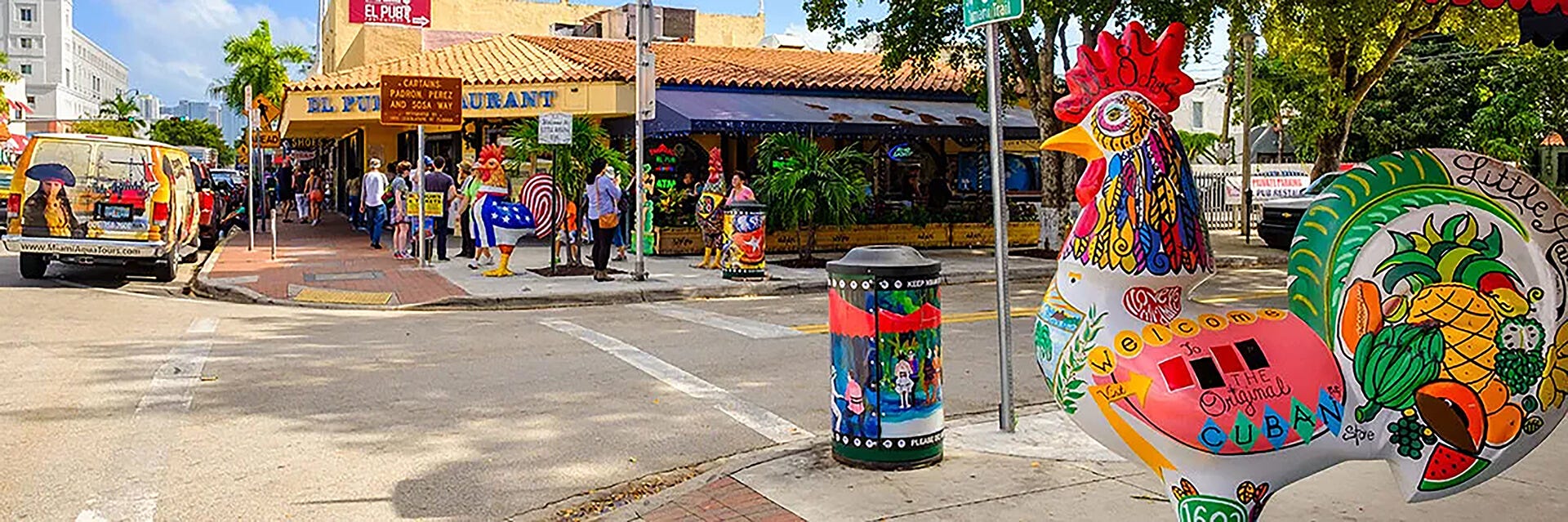
I understand that our experience was, to some extent, curated and manufactured. Like many ethnic neighborhoods from San Francisco’s Chinatown to New York’s Little Italy, Little Havana markets itself well. Enterprising entrepreneurs know that culture sells, and they welcome tourists who want to experience “exotic” music, food, and traditions. With their sometimes cringey kitsch and boosterish commercialism, ethnic enclaves have attracted a range of critics across the political spectrum, from those who decry “cultural commodification” to others who fear that they foster unhealthy resistance to assimilation.
But I think ethnic neighborhoods are worth appreciating and celebrating as something that has “gone right” in America. In a country that has attracted immigrants from everywhere on the planet, these neighborhoods offer a safe place to land, a community of people who can help newcomers acclimate to their strange new world. They are both a buffer and a bridge, providing comfort and connections that help cushion a difficult transition and show new arrivals how to make it in America.
Ethnic neighborhoods long predate the United States, as colonists (free and enslaved) sought to recreate elements of their former homes in “New” England, “New” Amsterdam, “New” Spain, and elsewhere. Each community of immigrants brought different architecture styles, agricultural methods, religious practices, cuisine, and music, giving their new communities distinctive cultural flair that persisted across generations.
We can trace the impact of various events in American history by looking at the rise of ethnic neighborhoods. The Gold Rush brought a wave of Chinese immigrants to California in the 1850s, and they established what would become the nation’s largest Chinatown. The massive influx of European immigration in the late 19th and early 20th centuries led to densely populated ethnic neighborhoods throughout urban America, from Little Italy and the Jewish Lower East Side in New York to Polish Downtown in Chicago. The Immigration and Nationality Act of 1965 and the creation of the U.S. refugee resettlement program opened the door to significant numbers of Asian and African immigrants, who have built Korea Town in Los Angeles, Little Ethiopia in D.C., and Little Mogadishu in Minneapolis (and Lewiston, Maine!).
The presence and persistence of ethnic communities throughout American history show that when people immigrate to America, whether by choice or under duress, they rarely want to leave their culture and traditions behind. Instead, they seek to preserve, protect, and pass on cherished traditions while also adapting to life in their new country. In Maine, the French Canadians who sought economic opportunity in burgeoning mill towns a century ago described their strategy of adaptation as “la survivance.” Surviving in a new land meant not simply thriving economically but, as importantly, preserving their language (French) and their faith (Catholicism) to keep their souls.
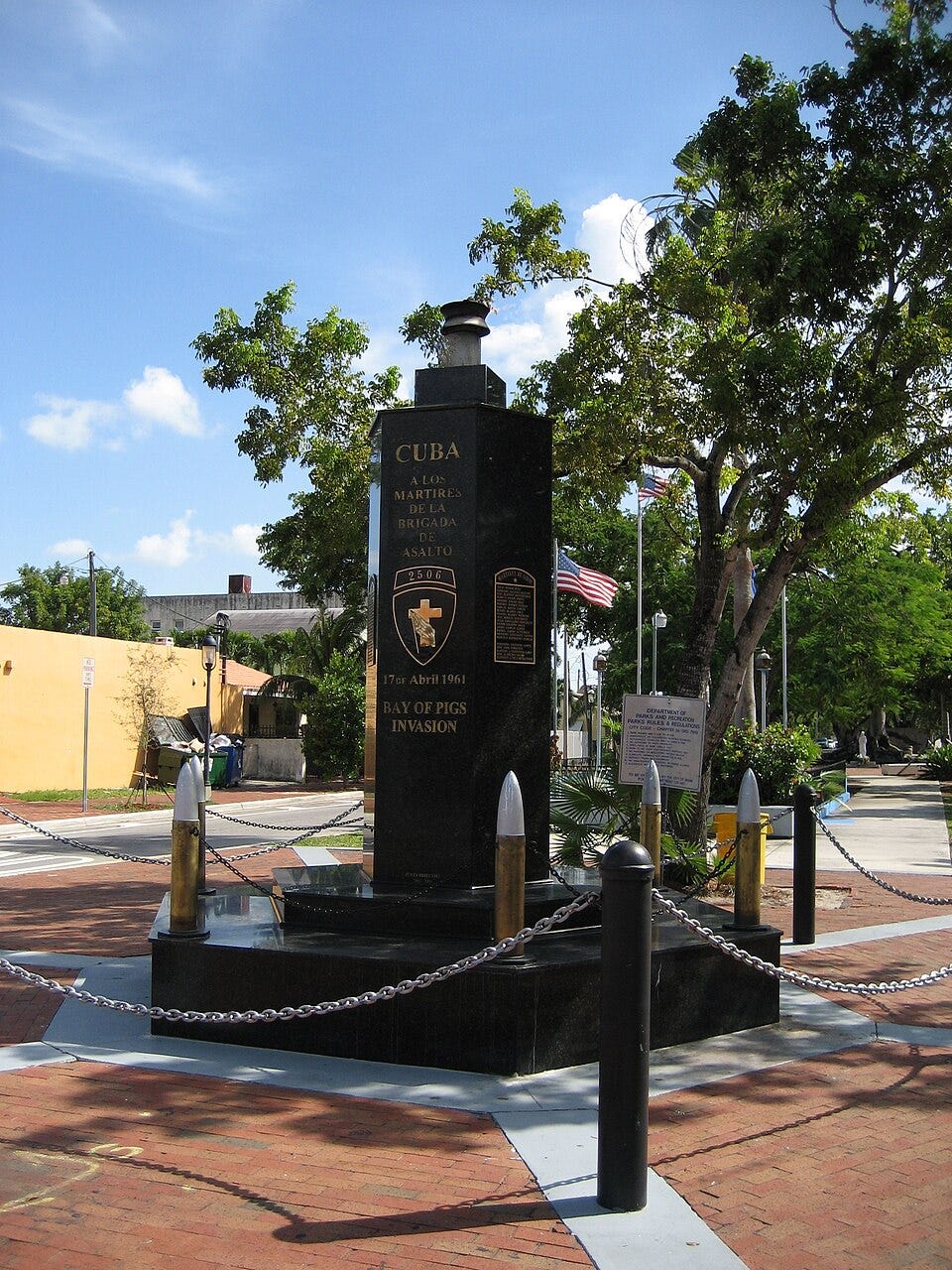
As a historian, I am fascinated by the role that ethnic neighborhoods play in providing space for alternative histories, narratives that may not jibe with what the rest of America may learn in school. In Little Havana, my kids and I happened upon a museum, monument, and mini-park memorializing the Bay of Pigs invasion in April 1961, when a group of 1400 Cuban exiles attempted to overthrow Fidel Castro’s Communist regime. For most Americans, the Bay of Pigs is a historical aside, usually remembered (if at all) as a foreign policy disaster early in the Kennedy Administration.
But in Little Havana, the Bay of Pigs story commands attention, told as a noble, though tragic, attempt to liberate Cuba from tyranny. The fallen members of Brigade 2506 are remembered as heroic martyrs in the ongoing fight for Cuban freedom. Ten years after the invasion, Miami’s Cuban community erected a monument topped with an eternal flame to illuminate Calle Ocho; at the unveiling ceremony, the young daughter of a Brigade 2506 member lit the flame. A recent, $1.35 million renovation added a new memorial and enhanced the park around it.2 Little Havana is determined not to forget, even if the rest of America has.
The Cold War looks different when seen through the lens of Little Havana, just as the Vietnam War looks different in San Jose’s Little Saigon. Ethnic neighborhoods serve as repositories of alternate historical memory, where immigrants tell stories, honor heroes, and remember events that most Americans know nothing about. The stories told in Little Havana and Little Saigon and Little Mogadishu offer different perspectives on our past and remind us that the world is a beautiful and complicated place, that people are endlessly creative and diverse, that there are many different and sometimes conflicting perspectives on the past.
Although the “melting pot” metaphor retains its powerful hold on the American imagination, ethnic neighborhoods help us see that we are more of a mosaic or a Caesar salad or, as Lin-Manuel Miranda puts it, a “great, unfinished symphony.” We don’t – we can’t – check our cultures at the door when we become American. We hold fast to old traditions even as we embrace new ones, preserving and adapting as we go, living ever with the tension between wanting to be fully American, yet also needing to be separate and distinct.
City of Miami Planning Department. “Census Information.” Miamigov.com.
Cohen, William. “Bay of Pigs Monument.” Clio: Your Guide to History. December 17, 2023.
I love the concept of "alternate historical memory" in connection with these ethnic neighborhoods. I was recently mentioning to a friend of mine that the historical stories we tell can vary a lot based upon which historical figures or groups you find sympathetic or unsympathetic.
It makes sense that the Miami Cubans would have a very different story of the Bay of Pigs than most Americans. (Same with the Cubans back in Cuba, who think of it as the "Victory of Giron.")
Thank you for this thoughtful piece. Robin said she loved the ice cream in Little Havana. And she also loved the history lesson.